Author: Rosana

  • Printable Monthly Budget Template (Free Download)

    Printable Monthly Budget Template (Free Download)

    Hi friend!  Are you ready to take control of your finances and get organized with your money? If the idea of budgeting makes you feel overwhelmed or if you’ve been searching for a system that actually works, I have great news for you: I’ve got a free printable monthly budget template that’s simple, easy to use, and super effective!

    This template is designed to help you track your income, expenses, and savings, all in one place. Whether you’re a total beginner or a seasoned budgeter looking for a fresh start, this monthly budget worksheet will help you manage your finances with ease. Plus, it’s completely free to download! 🎉

    In this post, I’ll show you how to use the template, why budgeting is so important, and how it can help you achieve your financial goals. Let’s dive in!

    Why You Need a Monthly Budget Template

    If you’re not already budgeting, you might be wondering: Why is budgeting such a big deal? Here are a few reasons why creating a budget can totally transform your finances (and your stress levels):

    1. Gain Clarity on Your Finances

    When you write down your income and expenses, you know exactly where your money is going. No more wondering why your bank account is empty before payday!

    2. Take Control of Your Spending

    A budget helps you prioritize what’s important to you, whether that’s paying off debt, saving for a vacation, or simply covering your bills without stress.

    3. Achieve Your Goals Faster

    By planning your spending, you can set aside money for your big goals—like buying a house, building an emergency fund, or starting a business.

    4. Reduce Financial Stress

    Let’s face it—money can be a major source of stress. Budgeting gives you a clear plan, so you can stop worrying and start feeling confident about your finances.

    What’s Included in the Free Budget Template

    This free printable monthly budget template is designed to be super user-friendly and covers all the basics. Here’s what you’ll find:

    1. Income Section

    This is where you’ll list all your sources of income for the month—your paycheck, side hustle earnings, or any other money coming in.

    2. Expense Categories

    We’ve included space for all your major spending categories, like:

    • Housing (rent/mortgage, maintenance)
    • Transportation (gas, public transit)
    • Food (groceries, dining out)
    • Fun money (entertainment, hobbies)

    You can add or remove categories and subcategories to customize the monthly budget template to your needs.

    3. Totaling Sections

    At the bottom, you’ll calculate:

    • Total income
    • Total expenses

    4. Savings Section

    Use this space to alocate your savings between your bank account, investments or wallet.

    How to Use the Monthly Budget Worksheet

    Step 1: Download the Template

    Print it out or use it digitally if you prefer.It is saved as .xls, so you can use it on any Excel version.

    Step 2: Adjust it to your needs

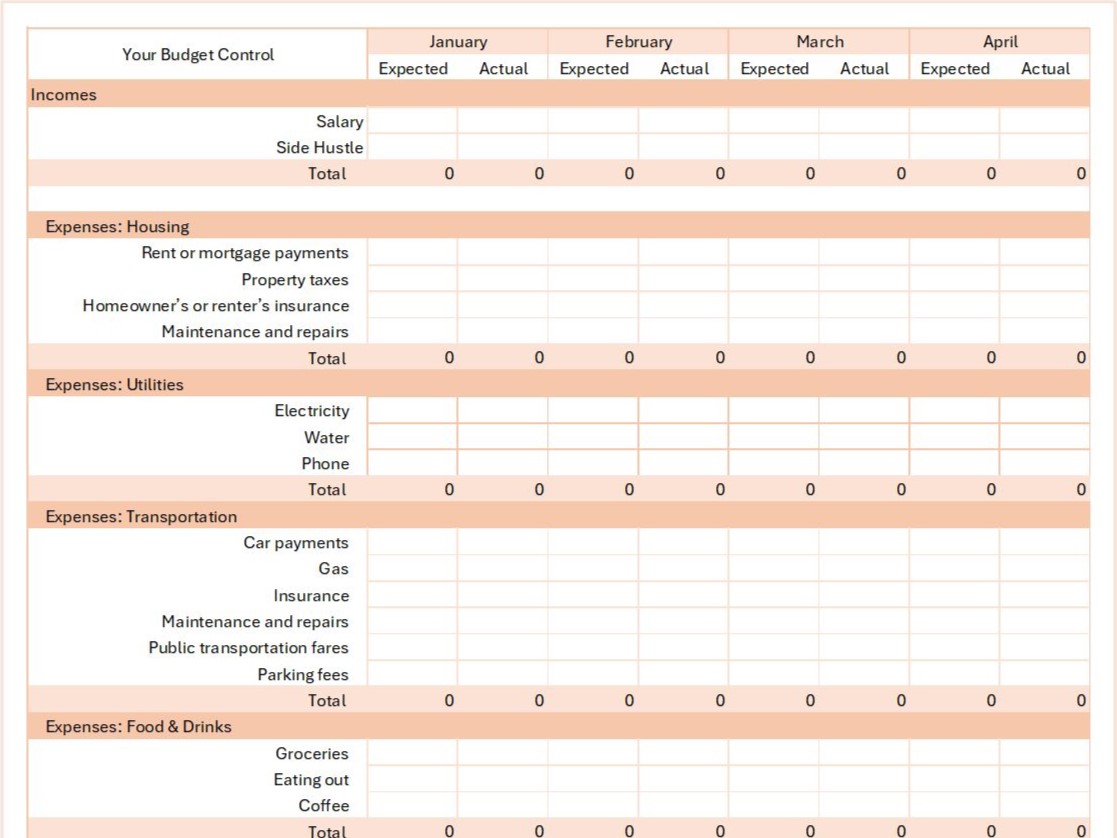
    This template has space to fill your expected and actual budget for 4 months – January to April. You can edit the names of the month on the top of the chart to budget for May to August and September to December.

    You can check the categories and subcategories included to add, change or remove lines as you see fit. The more personalized to you, the better your budget will be. 😉

    💡 Pro Tip: The template is made so you can add your incomes and expenses and it sums and subtracts everything automatically on Excel. If you intend to print it, you may want to delete all the “zeros” in the template. Doing this lets you print a blank template, but removes the ability to calculate. Never mind, you can always download it again. 😉

    Step 3: Fill in Your Expected Income

    Start by listing all the money you expect to bring in this month. Be sure to include:

    • Your regular paycheck
    • Side hustle income
    • Freelance or gig work
    • Any other sources of income (like child support or gifts)

    💡 Pro Tip: If your income varies, estimate on the lower side to avoid overspending.

    Step 4: List Your Fixed Expenses

    Fixed expenses are the bills that stay the same each month, like:

    • Rent or mortgage
    • Insurance premiums
    • Loan payments

    Add these to the appropriate categories in your budget, in the expected column.

    Step 5: Add Variable Expenses

    Next, list your variable expenses—things that can change month to month, like:

    • Groceries
    • Utilities
    • Gas

    💡 Pro Tip: Look at your bank statements to get an idea of how much you typically spend in each category.

    Step 6: Fill the real life columns

    As the month progesses, fill the columns that reflect your actual expenses and incomes. This will allow you to compare your expected budget vs reality, and show where your money is going.

    Step 7: Total Everything Up

    At the bottom of the worksheet, calculate your total income and expenses. If your expenses are higher than your income, look for areas to cut back. If you have money left over, consider putting it toward your savings or paying off debt.

    Tips for Sticking to Your Budget

    Creating a budget is one thing—sticking to it is another! Here are some tips to help you stay on track:

    1. Track Your Spending

    Use a notebook, app, or the notes section of the template to track every purchase you make. This will help you stay accountable.

    2. Review Your Budget Weekly

    Set aside time each week to check in with your budget. Adjust as needed to stay on track.

    3. Build in Some Fun Money

    Budgets shouldn’t feel restrictive! Include a small “fun money” category for treats, like a coffee date or a new book.

    4. Celebrate Small Wins

    Did you stick to your grocery budget this month? Save $50 more than last month? Celebrate those victories—they’ll keep you motivated!

    Why a Printable Template Is So Helpful

    I know there are tons of budgeting apps and fancy tools out there, but there’s something so satisfying about writing things down on paper. A printable template:

    • Keeps things simple: No complicated software to learn.
    • Is customizable: You can tweak it to fit your unique needs.
    • Is visually motivating: Seeing your numbers written out can make your progress feel real!

    What Makes This Template Unique?

    There are plenty of budget templates out there, but this one is designed with YOU in mind. It’s:

    • Beginner-Friendly: Perfect for anyone new to budgeting.
    • Customizable: Add your own categories or adjust as needed.
    • Pretty (and free!): Because who says budgeting can’t be fun?

    Final Thoughts

    Creating a budget doesn’t have to be overwhelming or boring. With the right tools—like this free printable monthly budget template—you can take control of your finances and start building the life you want.

    So what are you waiting for? Download your free budget template now and start taking charge of your money today. Put in practice what you have learnt from how to set up a budget and from the guide to budget categories! Let me know in the comments how you’re using it— I can’t wait to hear about your budgeting wins!


  • How to Budget to Move to Your First Apartment (Without Going Broke)

    How to Budget to Move to Your First Apartment (Without Going Broke)

    Moving into your first apartment is such an exciting milestone! It’s your first real taste of independence, decorating your own space, and finally not having to share a bathroom (hopefully). But as thrilling as it is, getting your finances in order for this big step can feel a little overwhelming.

    If you’re wondering how to handle all those new expenses without draining your bank account, you’re in the right place! Today, I’m walking you through how to budget to move to your first apartment with practical, stress-free tips. Let’s make this move as smooth (and affordable) as possible!

    Step 1: Know What You Can Afford

    The first rule of budgeting to move to your first apartment is figuring out how much you can actually afford to spend each month.

    1. Follow the 30% Rule

    A common guideline is to spend no more than 30% of your monthly income on rent. For example:

    • If you make $3,000 a month, aim for rent around $900.

    This rule isn’t set in stone, but it’s a good starting point. Remember, you’ll have other expenses like utilities, groceries, and maybe a Netflix subscription (because priorities, right?).

    2. Factor in All Apartment-Related Costs

    When you’re budgeting, don’t just look at the rent price. Consider these additional costs:

    • Utilities (electricity, water, gas, internet): $100–$200/month
    • Renter’s Insurance: $15–$30/month
    • Parking Fees (if not included): $50–$150/month
    • HOA Fees (for some apartments): Variable

    💡 Pro Tip: Ask the landlord what’s included in rent. Some apartments cover utilities or offer free parking, which can save you a lot!

    Step 2: Save for Move-In Costs

    Moving into your first apartment isn’t just about monthly rent—you’ll also have some up-front expenses.

    1. Security Deposit

    Most landlords require a deposit equal to one month’s rent. This is refundable, but you’ll need to budget for it up front.

    2. First and Last Month’s Rent

    Some leases require both first and last month’s rent at signing. If rent is $900, that’s $1,800 you’ll need right away.

    3. Moving Costs

    Whether you’re renting a U-Haul, hiring movers, or bribing friends with pizza, moving costs add up! Plan for:

    • Truck rental: $50–$200
    • Movers: $200–$500
    • Packing supplies: $50–$100

    Step 3: Budget for Furnishing Your Apartment

    Furnishing your first apartment can be super fun—but also expensive if you’re not careful. Here’s how to furnish your space without breaking the bank:

    1. Start with the Basics

    You don’t need to deck out your apartment on day one. Focus on essentials first:

    • Bed and mattress
    • Table and chairs
    • Basic kitchen supplies (pots, pans, dishes)
    • Couch or seating

    💡 Pro Tip: Check out thrift stores, Facebook Marketplace, or IKEA for affordable options.

    2. Budget for Extras Over Time

    Once you’ve covered the essentials, you can slowly add items like:

    • Rugs and curtains
    • Decor (plants, artwork, throw pillows)
    • Storage solutions (shelves, bins)

    Step 4: Create Your First Apartment Budget

    Now that you’ve got a handle on the costs, it’s time to create a budget to stay on track. Here’s how:

    1. List Your Monthly Expenses

    Include every recurring cost, like:

    • Rent: $900
    • Utilities: $150
    • Groceries: $300
    • Transportation (gas, public transit): $100
    • Subscriptions (Spotify, Netflix): $30

    2. Add a Savings Category

    Even on a tight budget, set aside something for savings. Aim for at least 10% of your income if you can.

    3. Factor in Fun Money

    You don’t have to cut out all the fun! Budget a small amount for dining out, entertainment, or treating yourself.

    Step 5: Cut Costs Where You Can

    If your budget feels a little tight, here are some tips to save money:

    1. Get a Roommate

    Sharing rent and utilities with a roommate can cut your costs in half. Just make sure you’re on the same page about bills, cleaning, and Netflix passwords!

    2. Choose an Affordable Area

    Living in a trendy neighborhood might sound great, but it usually comes with higher rent. Look for up-and-coming areas or apartments a little farther from the city center.

    3. Cook at Home

    Eating out adds up quickly! Save money by meal-prepping and cooking at home.

    Step 6: Plan for Unexpected Expenses

    Life happens, and it’s important to budget for surprises. Create an emergency fund to cover unexpected costs like:

    • Medical bills
    • Car repairs
    • Broken appliances

    Start small—$500 is a great first goal—and build from there.

    Step 7: Use Budgeting Tools to Stay on Track

    Managing all these expenses can feel overwhelming, but budgeting tools make it so much easier. Here are some of my favorites:

    • Mint: Tracks your income, expenses, and savings in one place.
    • YNAB (You Need a Budget): Perfect for zero-based budgeting fans.
    • Excel or Google Sheets: Simple and customizable if you prefer a DIY approach. You can download one for free here!

    Sample First Apartment Budget

    Here’s an example of what your budget might look like:

    CategoryMonthly Amount
    Rent$900
    Utilities$150
    Groceries$300
    Transportation$100
    Renter’s Insurance$25
    Fun Money$100
    Savings$150
    Miscellaneous$75
    Total$1,800

    💡 Goal: Keep your total expenses below your income to avoid overspending.

    Final Thoughts

    Moving into your first apartment is such an exciting time, but it’s important to plan ahead so you can enjoy your new space without stressing about money. By knowing what to expect, setting a budget, and sticking to it, you’ll be able to settle into your first apartment with confidence. So, what are you most excited about for your first apartment? Let me know in the comments—I’d love to hear all about it!

  • Why Budgets Fail and How to Fix them

    Why Budgets Fail and How to Fix them

    Hey there! Let me guess—you’ve started a budget (or two… or ten), and no matter what you do, it just doesn’t seem to stick. You’re not alone! So many of us start off strong, only to find ourselves wondering what went wrong a few weeks or months later.

    The good news? You can fix it! Today, we’re diving into why budgets fail and, more importantly, how to create a budget that works for you and your family. By the end of this post, you’ll have the tools and strategies you need to finally stick to a budget and reach your financial goals.

    Common Reasons Why Budgets Fail

    First, let’s get to the root of the problem. If your budget isn’t working, it’s likely because of one (or more) of these reasons:

    1. Your Budget Is Too Restrictive

    Budgets often fail because we make them unrealistic. It’s tempting to aim for perfection and try to cut every non-essential expense, but this approach usually backfires. Why? Because life happens!

    When your budget feels like a financial straitjacket, you’re more likely to rebel against it. You might stick to it for a week or two, but eventually, the pressure to “live a little” builds up, and before you know it, you’ve overspent.

    2. You’re Not Accounting for Irregular Expenses

    Surprise expenses can completely throw off your budget. Birthdays, holidays, car repairs, annual subscriptions—these are all things we tend to forget when creating our monthly budget.

    If you’re constantly dipping into your savings or using credit cards to cover these costs, your budget will feel like it’s failing you.

    How to solve it? Add an extra line or your budget dedicated to surprises. From my experience, almost every month brings one, so this line will be used often. We will see more about that ahead.

    3. Lack of Clear Goals

    If you don’t know why you’re budgeting, it’s easy to lose motivation. Without a clear purpose, sticking to a budget can feel like a chore rather than a step toward something exciting.

    My personal goal is ‘peace of mind’. I also think a lot about my retirement years, and about how I don’t want to depend on my kid – I want to be able to help him even after he becomes an adult. Maybe these goals work for you too?

    4. You’re Not Tracking Your Spending

    A budget is only as good as the information you put into it. If you’re not tracking your spending regularly, it’s impossible to know whether you’re sticking to your budget or where you’re overspending.

    5. You’re Using the Wrong Budgeting Method

    There’s no one-size-fits-all budget method. If you’re using a method that doesn’t suit your personality or lifestyle, it’s going to feel like an uphill battle.

    How to Fix Your Budget and Make It Work

    Now that we’ve identified the reasons why budgets fail, let’s talk about how to fix them!

    1. Build a Realistic Budget

    Start by creating a budget that reflects your actual lifestyle. Include some “fun money” so you don’t feel deprived. Life is meant to be enjoyed, and your budget should help you do that responsibly!

    💡 Tip: Use the 50/30/20 rule as a starting point:

    • 50% of your income for needs
    • 30% for wants
    • 20% for savings and debt repayment

    2. Plan for Irregular Expenses

    The key to avoiding surprise expenses is to plan for them in advance. Create sinking funds for things like:

    • Holiday shopping
    • Birthdays
    • Annual insurance premiums
    • Car maintenance

    By setting aside a little money each month, you’ll be ready when these expenses pop up.

    3. Set Specific Goals

    Having clear goals gives your budget purpose. Instead of saying, “I want to save money,” try something more specific like:

    • “I want to save $5,000 for a down payment on a house.”
    • “I want to pay off $3,000 in credit card debt in the next year.”

    Write your goals down and keep them somewhere visible to remind yourself why you’re budgeting.

    4. Track Your Spending Regularly

    The only way to know if you’re staying on track is to monitor your spending. This doesn’t have to be complicated! You can use:

    • A budgeting app like YNAB or Mint
    • A simple spreadsheet
    • Pen and paper

    💡 Pro Tip: Check in with your budget weekly to review your spending and make adjustments if needed. Allow yourself to learn from eventual mistakes and don’t feel down for it – remember that you are learning and, therefore, improving!

    5. Find a Budgeting Method That Works for You

    Not all budgeting methods work for everyone, so don’t be afraid to experiment! Here are a few popular methods:

    • Zero-Based Budgeting: Assign every dollar a job so your income minus expenses equals zero. Check more on zero-based budgeting vs. traditional budgeting.
    • Envelope System: Use cash envelopes to set spending limits for each category.
    • 50/30/20 Rule: A simple way to divide your income into needs, wants, and savings.
    • Pay Yourself First: Focus on saving and investing before spending on anything else.

    Try different methods and stick with the one that feels most natural to you.

    How to Stick to a Budget (and Love It)

    Creating a budget is one thing, but sticking to it? That’s the real challenge. Here’s how to make it easier:

    1. Automate Your Savings

    Set up automatic transfers to your savings account so you don’t even have to think about it. This “out of sight, out of mind” approach is a game-changer!

    2. Give Yourself Grace

    No one is perfect, and your budget won’t be either. If you overspend in one category, don’t throw in the towel. Adjust your budget and keep moving forward.

    3. Make It a Family Effort

    If you’re budgeting for your family, get everyone involved. Hold regular money meetings to discuss goals, review the budget, and celebrate progress together.

    4. Reward Yourself

    Budgeting doesn’t have to feel like punishment! Set small rewards for reaching milestones. For example:

    • Treat yourself to a fancy coffee after sticking to your budget for a month.
    • Plan a fun (budget-friendly) outing after hitting a savings goal.

    Or maybe… just seeing the numbers grow on your account will already feel like a reward!

    5. Keep Learning

    The more you understand personal finance, the better you’ll be at budgeting. Read blogs, listen to podcasts, and join online communities for tips and inspiration. Did you know we a have a list of 50+ budgeting terms? It is a great source of knowledge!

    Signs Your Budget Is Working

    How do you know if you’ve finally nailed your budget? Here are a few signs:

    • You feel in control of your money.
    • You’re reaching your savings goals.
    • You’re paying down debt.
    • You’re no longer stressed about surprise expenses.

    Final Thoughts

    Budgeting doesn’t have to be overwhelming or impossible. If your budget keeps failing, take a step back, figure out what’s not working, and make adjustments. Remember, budgeting is a skill—and like any skill, it gets easier with practice.

    You’ve got this, friend! With the tips in this post, you’ll be well on your way to creating a budget that works for you and your family. Let me know in the comments: What’s been your biggest struggle with budgeting? I’d love to help! Here’s to a successful financial journey!

  • Zero-Based Budgeting vs. Traditional Budgeting: Which Is Right for You?

    Zero-Based Budgeting vs. Traditional Budgeting: Which Is Right for You?

    Are you trying to figure out the best way to organize your finances and make every dollar count? One of the most common questions people ask when they’re diving into budgeting is: Should I use zero-based budgeting or stick with a traditional budget?

    If you’ve been wondering about these two approaches and which one is right for your unique financial situation, you’re in the right place! In this post, we’re breaking down zero-based budgeting vs. traditional budgeting in a way that’s easy to understand. We’ll cover the pros, the cons, and how to decide which method works best for you. Let’s dive in!

    What Is Zero-Based Budgeting?

    Let’s start with the new kid on the block (or at least, the one everyone’s talking about lately): zero-based budgeting.

    Zero-Based Budgeting Explained

    Zero-based budgeting (ZBB) is a system where you assign every single dollar of your income to a specific purpose until you’re left with zero. The idea is that every dollar “has a job,” whether it’s paying bills, saving, or treating yourself to a latte.

    💡 Example:
    If your monthly income is $3,000, you’d divide it like this:

    • Rent: $1,200
    • Groceries: $400
    • Savings: $300
    • Debt Payments: $200
    • Utilities: $150
    • Fun Money: $100
    • Miscellaneous: $50

    At the end of the process, you’ve accounted for all $3,000—hence the name “zero-based.”

    Pros of Zero-Based Budgeting

    1. Total Control: You know exactly where every dollar is going.
    2. Encourages Saving: It forces you to prioritize your goals (like saving or paying off debt).
    3. Flexibility: If something unexpected comes up, you can adjust your allocations as long as everything still totals zero.

    Cons of Zero-Based Budgeting

    1. Time-Consuming: It requires regular tracking and adjusting.
    2. Not Ideal for Irregular Incomes: If your income fluctuates, it can be tricky to plan ahead.
    3. Micromanagement: Some people find it overwhelming to allocate every single dollar.

    What Is Traditional Budgeting?

    Now let’s talk about the tried-and-true approach that’s been around forever: traditional budgeting.

    Traditional Budgeting Methods

    With a traditional budget, you create broad spending categories (like housing, transportation, and entertainment) and set a limit for each one based on your income. You aim to stick to those limits each month, but there’s usually more flexibility than in zero-based budgeting.

    💡 Example:
    If your income is $3,000, you might budget:

    • 50% for Needs (e.g., housing, groceries): $1,500
    • 30% for Wants (e.g., dining out, hobbies): $900
    • 20% for Savings/Debt: $600

    Instead of assigning every dollar, you leave some wiggle room within each category. The example here is for the 50/30/20 budget method, which is a variation of the traditional 80/20 budget method.

    Pros of Traditional Budgeting

    1. Simple and Straightforward: Easier to set up and manage.
    2. Less Time-Intensive: You don’t have to track every penny.
    3. Works for Irregular Incomes: Broad categories make it easier to adjust for fluctuating paychecks.

    Cons of Traditional Budgeting

    1. Less Precision: Money can “disappear” if you don’t track closely.
    2. Risk of Overspending: Without detailed allocations, it’s easier to go over budget.
    3. Doesn’t Prioritize Goals as Clearly: It’s harder to ensure savings and debt payments are prioritized.

    Key Differences Between Zero-Based and Traditional Budgeting

    Let’s compare these two methods side by side to make it super clear:

    FeatureZero-Based BudgetingTraditional Budgeting
    Main FocusEvery dollar has a jobBroad categories and general limits
    FlexibilityAdjusts for specific expensesAllows for wiggle room within categories
    Time CommitmentRequires frequent trackingEasier to maintain long-term
    Ideal forPrecise planners with steady incomePeople with irregular income or who prefer simplicity
    Savings/Debt PrioritizationHighModerate

    How to Decide Which Budgeting Method Is Right for You

    Now that you know the basics, how do you choose? Here are a few things to consider:

    1. Your Personality

    • Zero-Based Budgeting: Great if you like detailed planning and control.
    • Traditional Budgeting: Perfect if you prefer a more laid-back approach.

    2. Your Income Type

    • Zero-Based Budgeting: Works best for steady incomes where you can plan ahead.
    • Traditional Budgeting: Ideal if your income fluctuates or varies month to month.

    3. Your Financial Goals

    • Zero-Based Budgeting: Helps you prioritize saving and debt repayment by assigning every dollar.
    • Traditional Budgeting: Good if you’re focused on staying within general spending limits.

    Can You Combine Both Methods?

    Yes! You don’t have to stick to one system. Here’s how you can mix them:

    • Use zero-based budgeting for your essential expenses and financial goals (like saving or paying off debt).
    • Use traditional budgeting for flexible categories like entertainment or dining out.

    This hybrid approach gives you the best of both worlds!

    Examples

    Case Study 1: Amanda, the Planner

    Amanda has a steady income and loves knowing where every dollar goes. She uses zero-based budgeting to allocate her income to rent, utilities, savings, and even her morning coffee habit.

    Case Study 2: Jason, the Freelancer

    Jason’s income varies month to month, so he uses a traditional budget. He sets percentage-based limits for needs, wants, and savings, adjusting as his income changes.

    Tips for Success, No Matter Which Method You Choose

    1. Track Your Spending: Whether you’re micromanaging every dollar or working with broad categories, tracking is key.
    2. Start Small: If budgeting feels overwhelming, start with just a few categories or priorities.
    3. Be Flexible: Life happens, and budgets should adjust when it does.
    4. Review Regularly: Check in with your budget monthly (or weekly) to see how you’re doing.

    Final Thoughts

    There’s no “one-size-fits-all” when it comes to budgeting—it’s all about finding what works for YOU. Whether you choose zero-based budgeting, traditional budgeting, or a combination of both, the goal is the same: to take control of your money and make it work for you.

    So which method are you leaning toward? I’d love to hear your thoughts (and any budgeting wins you’ve had lately!) in the comments below. Let’s cheer each other on as we work toward financial freedom!

  • The 80/20 Budget Rule: How to Simplify Your Finances

    The 80/20 Budget Rule: How to Simplify Your Finances

    Let’s be real—budgeting can feel overwhelming sometimes. Between tracking every penny and trying to stick to strict spending categories, it’s easy to get frustrated and give up altogether. But what if I told you there’s a simpler way to manage your money?

    Enter the 80/20 budget rule, a straightforward method that’s perfect for anyone who wants to simplify their finances without sacrificing their goals. In this post, we’ll break down exactly what the 80/20 budget rule is, how it works, and how you can start using it today.

    What Is the 80/20 Budget Rule?

    The 80/20 budget rule is as simple as it sounds:

    • 80% of your income is used for spending.
    • 20% of your income is set aside for savings, investments and debt repayment.

    Unlike other budgeting methods, this one doesn’t require you to track every single category in detail. Instead, it gives you a high-level framework to manage your money.

    Why the 80/20 Budget Rule Works

    Here’s why this method is a game-changer for so many people:

    1. It’s Simple to Follow
      You don’t need to micromanage your spending. Just make sure you’re saving 20% and living within the remaining 80%.
    2. It’s Flexible
      Life isn’t one-size-fits-all, and neither is this budget. Whether you’re single, married, or raising a family, you can adapt the 80/20 rule to suit your lifestyle.
    3. It Builds Healthy Habits
      By prioritizing savings, you’re building a strong financial foundation without feeling deprived.

    How to Start Using the 80/20 Budget Rule

    Ready to give it a try? Here’s how to put the 80/20 budget rule into action.

    1. Calculate Your Income

    Start by figuring out your monthly take-home pay (your net income). This is the amount you have left after taxes, insurance, and other deductions.

    💡 Tip: If your income varies month to month, use an average based on the last six months.

    2. Allocate 20% for Savings and Debt Repayment

    Take 20% of your income and use it for:

    • Savings: This could include building an emergency fund, saving for a house, or investing for retirement.
    • Debt Repayment: Focus on paying off high-interest debt like credit cards or personal loans.

    💡 Example: If your monthly income is $4,000, you’d allocate $800 (20%) to savings and debt repayment.

    3. Use the Remaining 80% for Spending

    The remaining 80% of your income covers everything else:

    • Rent or mortgage
    • Groceries
    • Utilities
    • Transportation
    • Entertainment

    This is your “all-in” spending budget, so make sure you stay within this limit!

    💡 Example: With a $4,000 income, you’d have $3,200 (80%) for your living expenses.

    How to Stick to the 80/20 Budget Rule

    Even with a simple method like this, it can be tricky to stick to your plan. Here are some tips to help you succeed:

    1. Automate Your Savings

    The easiest way to save is to make it automatic. Set up a direct deposit to transfer 20% of your paycheck into a separate savings account as soon as you get paid.

    2. Track Your Spending (But Don’t Overcomplicate It)

    You don’t need a detailed spreadsheet—just keep an eye on your spending to make sure you’re staying within the 80% limit. A budgeting app like Mint or YNAB can make this super easy.

    3. Adjust as Needed

    The 80/20 rule is flexible, so don’t be afraid to tweak it if necessary. For example, if you’re aggressively paying off debt, you might allocate 30% to savings and debt repayment and live on 70%.

    4. Build an Emergency Fund

    Having an emergency fund (3–6 months of living expenses) gives you peace of mind and protects your budget from unexpected expenses.

    5. Celebrate Progress

    Saving 20% of your income is a big deal—don’t forget to celebrate your wins along the way! Treat yourself to something small or plan a budget-friendly outing when you hit milestones.

    Pros and Cons of the 80/20 Budget Rule

    Like any budgeting method, the 80/20 rule has its strengths and weaknesses. Let’s take a look:

    Pros

    • Easy to Implement: No need to track every penny or use complicated spreadsheets.
    • Prioritizes Savings: Encourages you to save before spending.
    • Flexible: Works for a variety of lifestyles and income levels.

    Cons

    • Lack of Detail: It doesn’t provide a breakdown for specific spending categories.
    • May Not Work for High Debt: If you have significant debt, you might need to allocate more than 20% to repayments.
    • Temptation to Overspend: Without strict categories, it’s easier to overspend in some areas.

    Who Should Try the 80/20 Budget Rule?

    The 80/20 rule is a great fit for:

    • Beginners who want a simple, no-fuss budgeting method.
    • Busy people who don’t have time for detailed expense tracking.
    • Those with a steady income and manageable debt.

    If you’re looking for a way to ease into budgeting without feeling overwhelmed, this method is definitely worth a try!

    How the 80/20 Budget Rule Compares to Other Methods

    Curious how it stacks up against other popular budgeting methods? Let’s compare:

    80/20 vs. 50/30/20 Rule

    • The 50/30/20 rule divides your income into needs (50%), wants (30%), and savings (20%).
    • The 80/20 rule is simpler, combining needs and wants into one 80% category.

    80/20 vs. Zero-Based Budgeting

    • Zero-based budgeting assigns every dollar a job, requiring more detailed tracking.
    • The 80/20 rule is less detailed, focusing on high-level allocations.

    Real-Life Example of the 80/20 Budget Rule

    Let’s say you’re a single parent with a monthly take-home pay of $3,500. Here’s how the 80/20 rule might look for you:

    • 20% Savings and Debt Repayment: $700
      • $400 to pay off credit card debt
      • $300 into an emergency fund
    • 80% Spending: $2,800
      • Rent: $1,200
      • Groceries: $400
      • Utilities: $200
      • Transportation: $300
      • Miscellaneous: $700

    This setup gives you a clear plan for your money without overcomplicating things.

    What if it fails?

    It is common to fear failure. Fear can be paralyzing and prevent you from even trying, so let’s make it clear: it is completely ok if the 80/20 budget rule doesn’t work for you – you will learn from it and will have lost nothing from trying this simple budgeting method.

    Plus, you can either improve it to make your own, personal budgeting method or choose another method that suits you better. In any case, you will have learnt a bit and got some experience in budgeting – you can only get better!

    To make it even easier, check our own take on why budgets fail and how to fix them. I think this will solve the problem! 😉

    Final Thoughts: Simplify Your Finances Today

    The 80/20 budget rule is perfect for anyone who wants to manage their money without the stress of micromanaging every expense. It’s simple, flexible, and effective, making it a great starting point for beginners—or a refreshing change for seasoned budgeters who want to simplify their approach. Give it a try, and let me know how it works for you! What’s your biggest struggle with budgeting? I’d love to hear from you in the comments. Here’s to making your money work for you—without all the stress!

  • The Ultimate Guide to Budget Categories: What You Should (and Shouldn’t) Include

    The Ultimate Guide to Budget Categories: What You Should (and Shouldn’t) Include

    Let’s talk about something that can totally transform your finances: budget categories. Whether you’re new to budgeting or a seasoned pro, having the right categories in place is key to organizing your budget and making sure your money works for you.

    In this ultimate guide, we’ll cover everything you need to know about budget categories — what to include, what to skip, and how to organize it all. By the end, you’ll have a crystal-clear plan for managing your money like a boss. Sounds good? Let’s dive in!

    Why Budget Categories Matter

    We’ve seen how to set up a budget; here, we’ll see in more details how to establish budget categories that work for you. Before we jump into the details, let’s chat about why categories are so important.

    1. They Provide Clarity
      Budget categories help you see exactly where your money is going. No more guessing or wondering why your bank account is empty at the end of the month!
    2. They Help You Stay Organized
      Dividing your expenses into categories makes it easier to track spending and stick to your budget.
    3. They Show Your Priorities
      Your budget reflects what matters most to you, and categories make those priorities crystal clear.

    How to Organize a Budget

    Organizing a budget can feel overwhelming at first but breaking it into categories makes it much easier. Here’s a simple process to follow:

    1. Start with Your Income
      Begin by listing all your income sources, such as your salary, freelance work, side hustles, or rental income.
    2. Break Down Your Expenses
      Divide your expenses into broad categories like housing, transportation, food, and entertainment.
    3. Set Spending Limits
      Assign a specific dollar amount or percentage of your income to each category based on your priorities and financial goals.
    4. Track and Adjust
      Monitor your spending throughout the month and adjust your budget categories as needed.

    Essential Budget Categories to Include

    Let’s take a closer look at the most important categories you should include in your budget.

    1. Housing

    Your housing costs will likely be one of your biggest expenses. This category includes:

    • Rent or mortgage payments
    • Property taxes
    • Homeowner’s or renter’s insurance
    • Utilities (electricity, water, gas)
    • Maintenance and repairs

    💡 Tip: Try to keep your housing costs below 30% of your monthly income.

    2. Transportation

    Whether you drive, take public transit, or bike to work, transportation is an essential category. Include:

    • Car payments
    • Gas
    • Insurance
    • Maintenance and repairs
    • Public transportation fares
    • Parking fees

    3. Food

    We all have to eat, but it’s easy for food expenses to spiral out of control! Divide this category into:

    • Groceries
    • Dining out or takeout
    • Coffee runs (if this is a regular habit!)

    💡 Tip: Meal planning can help you stick to your grocery budget.

    4. Savings and Investments

    This category is for your future self! Allocate funds to:

    • Emergency fund
    • Retirement savings
    • College savings (if applicable)
    • Investments

    💡 Goal: Aim to save at least 20% of your income if possible.

    5. Debt Payments

    If you’re paying off debt, create a dedicated category for:

    • Credit card payments
    • Student loans
    • Car loans
    • Personal loans

    💡 Tip: Focus on paying off high-interest debt first to save money in the long run.

    6. Health and Insurance

    Taking care of your health is essential! Include:

    • Health insurance premiums
    • Co-pays and prescriptions
    • Dental and vision care

    7. Entertainment and Recreation

    You deserve to have fun, so don’t forget to budget for things you enjoy, such as:

    • Subscriptions (Netflix, Spotify, etc.)
    • Hobbies (crafts, sports, etc.)
    • Outings and vacations

    💡 Tip: Be mindful of how much you spend here to avoid overspending on non-essentials.

    8. Personal and Family Expenses

    This category covers the day-to-day stuff that doesn’t fit anywhere else, like:

    • Childcare
    • Clothing and shoes
    • Beauty and grooming (haircuts, skincare, etc.)

    9. Giving and Donations

    If giving back is important to you, create a category for:

    • Charitable donations
    • Tithing (if applicable)
    • Gifts for birthdays, holidays, or special occasions

    10. Miscellaneous

    Finally, include a “miscellaneous” category for unexpected or one-off expenses. This can be a lifesaver when something random pops up!

    What You Shouldn’t Include

    Now, let’s talk about what NOT to include in your budget categories.

    1. Overly Specific Categories

    If your budget has too many tiny categories, it can become overwhelming to track. Instead, group similar expenses together (e.g., groceries and dining out under “Food”).

    2. Unpredictable Income

    If you have irregular income, base your budget on your lowest earning month. Don’t rely on potential income that isn’t guaranteed.

    3. “Fun Money” That’s Too High

    While it’s important to have fun, don’t let this category take over your budget. Balance is key!

    Common Budget Mistakes to Avoid

    Even with the best categories, budgeting mistakes can happen. Here’s how to avoid them:

    • Not Accounting for Seasonal Expenses: Remember to budget for things like holiday gifts or back-to-school supplies.
    • Forgetting Annual Expenses: Include things like car registration or insurance premiums.
    • Underestimating Variable Expenses: It’s better to overestimate categories like groceries than to come up short.

    How to Customize Your Budget Categories

    Your budget should reflect YOUR life and priorities. Here are a few ways to customize your categories:

    1. Add Subcategories: For example, divide “Savings” into “Emergency Fund” and “Vacation Fund.”
    2. Use Percentages: Allocate a percentage of your income to each category (e.g., 10% for entertainment).
    3. Reevaluate Regularly: As your life changes, update your categories to reflect your new priorities.

    Sample Budget Categories List

    Here’s a quick recap of categories you can include in your budget:

    1. Housing
    2. Transportation
    3. Food
    4. Savings and Investments
    5. Debt Payments
    6. Health and Insurance
    7. Entertainment and Recreation
    8. Personal and Family Expenses
    9. Giving and Donations
    10. Miscellaneous

    Do you want to see a sample of a budget template in real life? Check our free downloable monthly budget template – you can even use it as your budget spreadsheet. Just adjust the categories to suit you, and you’re good to go! 😉

    How to use budget categories in practice

    You might find that a mix of methods works best for you—like jotting down daily purchases in a notebook or on your phone so you don’t forget them, and then transferring everything to your spreadsheet once a week.

    If that’s your style, keep things simple! Just write down what you bought and how much you spent in your quick notes, and save the category breakdown for when you organize everything in your spreadsheet later. That way, you stay on top of your spending without making budgeting feel like a full-time job! 😊

    Final Thoughts

    Having the right budget categories is a game-changer when it comes to managing your money. They help you stay organized, plan for the future, and make sure your spending aligns with your priorities.

    Remember, your budget is personal — don’t be afraid to tweak these categories to fit your unique lifestyle and goals. And if something isn’t working, it’s okay to adjust!

    What categories do you use in your budget? Let me know in the comments — I’d love to hear your ideas! Here’s to building a budget that works for you.

  • How to Budget When You’re Living Paycheck to Paycheck

    How to Budget When You’re Living Paycheck to Paycheck

    Are you feeling like you’re constantly running out of money before the next paycheck hits your account? You’re not alone—so many people feel stuck in the cycle of living paycheck to paycheck. The good news? You can break free and start feeling more in control of your finances!

    Today, I’m sharing my best tips for how to budget when you’re living paycheck to paycheck. Even if you feel like there’s no extra money to work with, you’d be amazed at what small changes can do. Ready to take control? Let’s do this together!

    Why Budgeting Is Important (Even on a Tight Income)

    Before we dive into the how-to, let’s talk about why budgeting is so powerful—especially if money is tight:

    1. It Reduces Stress: Knowing where your money is going brings peace of mind, even if your budget is small.
    2. It Stops the Guesswork: A clear plan helps you feel in control instead of constantly wondering if you’ll make it to the next payday.
    3. It Helps You Save (Yes, Even on a Tight Budget!): Budgeting can help you find ways to put money toward your goals, no matter how small.

    Step 1: Understand Your Financial Picture

    To build a budget that works, you first need to know exactly what’s coming in and going out.

    1. Calculate Your Income

    Add up all the money you bring in during a month. This includes:

    • Paychecks
    • Side hustles or gig work
    • Child support or other income sources

    💡 Pro Tip: If your income fluctuates, use the lowest amount you typically earn as your baseline. You can use guide on how to budget on an irregular income for reference on this topic.

    2. Track Your Expenses

    Take a week or two to write down every dollar you spend. Then group your expenses into categories like housing, food, transportation, and entertainment.

    3. Identify Your Spending Leaks

    Look for areas where you can cut back. For example:

    • Are you eating out more often than you thought?
    • Do subscription services take up more of your budget than they should?

    Step 2: Prioritize Your Expenses

    When you’re living paycheck to paycheck, it’s important to focus on what matters most.

    1. Cover the Essentials First

    Make sure your basic needs are met before anything else. These include:

    • Housing
    • Utilities
    • Food
    • Transportation
    • Minimum debt payments

    💡 Pro Tip: Write these down as your “non-negotiables” in your budget.

    2. Trim Non-Essential Spending

    Once the essentials are covered, look at where you can cut back on non-essentials like:

    • Entertainment
    • Dining out
    • Shopping

    Step 3: Build a Bare-Bones Budget

    A bare-bones budget is exactly what it sounds like — a super-simple budget that only includes the essentials.

    Here’s an example:

    • Rent/Mortgage: $1,000
    • Groceries: $400
    • Utilities: $200
    • Transportation: $150
    • Minimum Debt Payments: $250

    💡 Goal: Keep your total spending at or below your monthly income.

    Step 4: Start Saving, Even if It’s Small

    I know saving money can feel impossible when you’re living paycheck to paycheck, but even $5 or $10 a week can add up over time.

    1. Build an Emergency Fund

    Start by saving for emergencies, like car repairs or unexpected bills. Aim for $500 to $1,000 to start.

    💡 Pro Tip: Set up a separate savings account so you’re not tempted to spend it.

    2. Automate Your Savings

    If possible, automate small transfers to your savings account every payday. Treat it like a gift to yourself. (This is the base of the pay yourself first budgeting method.)

    Step 5: Tackle Your Debt

    Debt can make living paycheck to paycheck feel even harder. Start chipping away at it with these steps:

    1. List Your Debts

    Write down all your debts, including balances, interest rates, and minimum payments.

    2. Choose a Repayment Strategy

    • Debt Snowball: Pay off the smallest debt first for quick wins.
    • Debt Avalanche: Focus on the highest-interest debt to save money in the long run.

    💡 Pro Tip: Use any extra money (like tax refunds or side hustle income) to pay off debt faster.

    Step 6: Find Ways to Boost Your Income

    If cutting expenses isn’t enough, look for opportunities to bring in extra money:

    • Start a side hustle (like freelancing or selling handmade goods).
    • Pick up extra hours at work.
    • Sell items you no longer use on platforms like Facebook Marketplace or eBay.

    Every little bit helps when you’re working to break the paycheck-to-paycheck cycle!

    Step 7: Track Your Progress

    Budgeting isn’t a one-and-done thing—it’s a process. Keep tracking your spending and adjusting your budget as needed.

    💡 Pro Tip: Celebrate small wins, like saving $50 or paying off a credit card. Every step forward is progress!

    What to Avoid When Budgeting Paycheck to Paycheck

    Now that we’ve covered the steps, let’s talk about a few common mistakes to avoid:

    1. Ignoring Your Budget
      A budget only works if you stick to it! Check in with your spending regularly.
    2. Relying on Credit Cards
      Using credit to cover expenses can lead to more debt, making it harder to get ahead.
    3. Skipping Savings
      Even if money is tight, try to save something—even if it’s just a few dollars a week.

    Sample Paycheck-to-Paycheck Budget

    Here’s what a paycheck-to-paycheck budget might look like for someone earning $2,500 a month:

    • Housing: $1,000
    • Groceries: $400
    • Utilities: $200
    • Transportation: $150
    • Debt Payments: $250
    • Savings: $100
    • Entertainment: $100
    • Miscellaneous: $300

    💡 Goal: Adjust the numbers to fit your income and priorities.

    Final Thoughts

    Living paycheck to paycheck can feel overwhelming, but creating a budget is the first step toward financial freedom. By understanding your finances, prioritizing your expenses, and saving (even just a little), you can start building a better financial future.

    Remember, budgeting is a journey—it’s okay if it’s not perfect right away! The important thing is to keep going and celebrate your progress along the way. Have you tried budgeting while living paycheck to paycheck? What strategies worked for you? Let me know in the comments—I’d love to hear your story!

  • How to Budget on an Irregular Income (Tips for Freelancers and Gig Workers)

    How to Budget on an Irregular Income (Tips for Freelancers and Gig Workers)

    Budget on an Irregular Income – If you’re a freelancer, gig worker, or someone with an irregular income, you know how tricky it can be to create a budget. Some months your income might be amazing, while other months leave you wondering how you’ll make ends meet. Sound familiar?

    The good news is that budgeting with irregular income doesn’t have to be overwhelming! With a little planning and the right tools, you can take control of your finances and feel confident, no matter what your paycheck looks like.

    Today, we’re diving into everything you need to know about how to budget with irregular income. Whether you’re a full-time freelancer, a side hustler, or working in the gig economy, these tips will help you create a budget that works for YOU.

    Why Budgeting Is Crucial for Irregular Incomes

    Let’s start with why budgeting is so important when your income fluctuates:

    1. It Reduces Stress: Knowing where your money is going (even on lower-income months) can bring you peace of mind.
    2. It Helps You Plan for the Future: With a budget, you can save for your goals, even if your income isn’t consistent.
    3. It Keeps You Prepared: A solid budget ensures you’re ready for unexpected expenses, slow months, or emergencies.

    Challenges of Budgeting with Irregular Income

    Before we dive into solutions, let’s talk about some of the unique challenges you might face:

    • Inconsistent Paychecks: Your income can vary significantly from one month to the next.
    • Unpredictable Expenses: Freelancers often have additional costs like taxes, business expenses, and health insurance.
    • Difficulty Saving: It’s harder to save when your income fluctuates.

    But don’t worry—these challenges aren’t impossible to overcome! Let’s break it down step by step.

    Step 1: Find Your Baseline Income

    When your income varies, it’s essential to know your bare minimum income—the lowest amount you expect to earn in a month.

    💡 How to Calculate Your Baseline Income:

    1. Look at your income over the past 6–12 months.
    2. Identify the lowest amount you earned in a single month.
    3. Use this number as the baseline for your budget.

    Step 2: Identify Your Fixed and Variable Expenses

    Once you know your baseline income, figure out your expenses. These typically fall into two categories:

    • Fixed Expenses: These don’t change month to month (e.g., rent/mortgage, utilities, car payments).
    • Variable Expenses: These fluctuate (e.g., groceries, entertainment, travel).

    💡 Pro Tip: List out all your expenses and prioritize the essentials like housing, food, and transportation.

    Step 3: Build a Bare-Bones Budget

    A bare-bones budget covers only the necessities, which is crucial during lower-income months.

    Here’s an example:

    • Rent: $1,200
    • Groceries: $400
    • Utilities: $200
    • Transportation: $150
    • Minimum Debt Payments: $200
      Total: $2,150

    Your bare-bones budget ensures you can cover your needs even during a slow month.

    Step 4: Save During High-Income Months

    When you have a great month and earn more than your baseline, don’t spend it all! Instead:

    • Build an Emergency Fund: Save 3–6 months’ worth of living expenses to cover slow periods.
    • Create a Buffer Fund: Set aside extra income to even out your paychecks during lower-income months.

    💡 Pro Tips: Open a separate savings account for your buffer fund so you’re not tempted to dip into it. You can also apply the 80/20 budget rule to make sure you build your savings. 😉

    Step 5: Automate Savings and Payments

    Automation is a freelancer’s best friend!

    • Set Up Automatic Transfers: Move a percentage of your income to savings every time you get paid.
    • Automate Bill Payments: Avoid late fees by setting up automatic payments for your fixed expenses.

    Step 6: Prepare for Taxes

    One of the biggest budgeting mistakes freelancers make is forgetting about taxes. Unlike traditional employees, taxes aren’t withheld from your paycheck, so it’s up to you to set money aside.

    💡 How to Plan for Taxes:

    • Save 20–30% of your income for taxes.
    • Open a separate account for tax savings.
    • Pay estimated quarterly taxes to avoid penalties.

    Step 7: Track Your Income and Expenses

    Tracking your finances is even more important when your income fluctuates. Use tools like:

    • Budgeting Apps: Mint, YNAB, or PocketGuard.
    • Spreadsheets: Create a simple income and expense tracker.
    • Old-School Notebook: If you prefer pen and paper, that works too!

    The goal is to know exactly how much you’re earning, spending, and saving each month. Check our free printable monthly budget template – it is a good starting point to keep your finances on track!

    Step 8: Adjust Your Budget Regularly

    Your budget isn’t set in stone—it’s a living document that should adapt to your changing income. Review it monthly to:

    • Adjust for high- or low-income months.
    • Account for new expenses or changes in priorities.

    💡 Pro Tip: Schedule a “money date” each month to check in with your budget.

    Step 9: Diversify Your Income

    One way to stabilize your finances as a freelancer or gig worker is to diversify your income streams. For example:

    • Add a side hustle.
    • Offer new services or products.
    • Look for part-time or seasonal work during slow periods.

    Having multiple income streams can help you avoid the rollercoaster of irregular paychecks.

    Step 10: Don’t Forget Self-Care

    Budgeting on an irregular income can feel stressful at times, so don’t forget to prioritize self-care. Give yourself grace, celebrate small wins, and take breaks when you need them.

    Sample Budget for Freelancers

    Here’s what an irregular income budget might look like for a freelancer earning $3,000 in one month:

    • Savings and Buffer Fund: $600 (20%)
    • Fixed Expenses: $1,500 (Rent, insurance, subscriptions)
    • Variable Expenses: $500 (Groceries, transportation, entertainment)
    • Taxes: $400

    In higher-income months, you could increase your savings or pay down debt faster.

    Final Thoughts

    Budgeting with irregular income can be a challenge, but it’s absolutely doable with the right strategies. By building a bare-bones budget, saving during high-income months, and tracking your finances, you can take control of your money and feel confident, even when your paychecks fluctuate.

    Remember, budgeting is a journey, not a destination. Be patient with yourself, make adjustments as needed, and don’t forget to celebrate your progress along the way.

    What’s your biggest struggle with budgeting on an irregular income? Let me know in the comments—I’d love to help!

  • How to Set Up a Budget (and Actually Stick to It!)

    How to Set Up a Budget (and Actually Stick to It!)

    I know “budgeting” might not sound like the most exciting topic in the world, but let me tell you – it can be life-changing. When you set up a budget you take control of your finances; you’re not just managing money – you’re creating peace of mind, reducing stress, and paving the way for the life you’ve always dreamed of. Sounds pretty amazing, right? Let’s dive in and get started!

    Why Setting Up a Budget is So Important

    Before we jump into the nitty-gritty, let’s talk about why budgeting matters. Think of a budget as your financial GPS. It shows you where you are, where you want to go, and how to get there. Without a budget, it’s easy to overspend, fall into debt, or lose track of your financial goals. But with one? You can save for that dream vacation, pay off debt faster, or finally build up that emergency fund you’ve been thinking about.

    Step 1: Know Your Reason to Set Up a Budget

    First things first—figure out why you’re budgeting. Are you trying to save for something specific, like a family trip or a new car? Do you want to eliminate the stress of living paycheck to paycheck? Or maybe you’re planning for the future, like buying a home or retiring early?

    Write down your “why” and keep it somewhere visible (I suggest the fridge door!) Trust me, on those days when you’re tempted to blow the budget, having that reminder can help keep you on track.

    Step 2: Track Your Income

    Next up, let’s figure out how much money you’ve got coming in. This includes:

    • Your paycheck(s)
    • Any side hustle income
    • Child support, alimony, or other regular sources of income

    If your income varies (hello, freelancers and gig workers!), take the average of your earnings over the past three to six months. Write this number down—it’s the starting point for your budget!

    Step 3: List Your Expenses

    Now it’s time to get real about your spending. Break your expenses into two categories:

    1. Fixed Expenses – These are bills that don’t change much from month to month, like rent/mortgage, utilities, insurance, and subscriptions.
    2. Variable Expenses – These are things that fluctuate, like groceries, gas, entertainment, and dining out.

    Take a look at your bank statements from the past three months to get a clear picture of where your money is going. Be honest with yourself—this isn’t about judgment, it’s about clarity.

    Step 4: Give Every Dollar a Job

    This is where the magic happens! Using the total amount of income you calculated earlier, assign every single dollar to a category. The goal is to “spend” all your income on paper (or in an app) before you actually spend it in real life.

    Here’s a basic example:

    • Rent/Mortgage: $1,200
    • Utilities: $150
    • Groceries: $400
    • Debt Payments: $300
    • Savings: $200
    • Fun Money: $100

    Total: $2,350 (assuming that’s your income!)

    This method is often called “zero-based budgeting,” and it’s a game changer. By giving every dollar a purpose, you’ll feel more in control of your money.

    Step 5: Prioritize Your Goals

    When you’re setting up your budget, make sure your goals align with your priorities. If paying off debt is at the top of your list, allocate extra funds toward that. If building an emergency fund is more urgent, focus on that instead.

    It’s all about balance. You can still have some fun money or treat yourself, but make sure your financial goals get the attention they deserve.

    Step 6: Use Tools to Make Budgeting Easier

    Let’s be real—no one wants to spend hours crunching numbers every month. Luckily, there are so many tools that can make budgeting a breeze. Here are a few options to check out:

    • Apps like YNAB (You Need a Budget) or Mint
    • Spreadsheets (that you can do on Excel)
    • Budget Sheets (the simplest one: a white paper on the fridge where you write your goals and spendings!)

    💡 Pro Tip: We have a printable monthly budget template spreadsheet for Excel that is free!!! It is also customizable, so you can make it work for you!

    Choose the method that works best for you and your family. The easier it is, the more likely you are to stick with it. You can choose to start with the paper-on-the-fridge budget sheet and, once a week, transfer the data to an excel, where you can organize it all in different categories. As simple as it is, it can give a good insight of where the money is going.

    Step 7: Track and Adjust

    Here’s the thing about budgets—they’re not “set it and forget it.” Life happens, and your budget might need some tweaks along the way. For example:

    • Your utility bill might spike in the winter.
    • You might get a raise (yay!) or have an unexpected expense pop up.

    Set aside 10–15 minutes once a week to review your budget and make any necessary adjustments. This habit will keep you on track and help you avoid surprises.

    💡 Pro Tip: Don’t feel upset if your initial budget doesn’t exactly match reality. It is only natural that you will learn and get better at it with practice.

    Step 8: Don’t Forget to Reward Yourself

    Budgeting isn’t about deprivation — it’s about being intentional. So, celebrate your wins along the way! Maybe you treat yourself to a fancy coffee after paying off a credit card, or plan a family movie night after hitting a savings milestone. Rewards keep the process fun and motivating.

    Common Budgeting Mistakes to Avoid

    Nobody’s perfect, and it’s totally normal to hit a few bumps along the way. Here are some common mistakes to watch out for:

    • Being too strict: Leave room for flexibility! Life doesn’t always go as planned.
    • Not tracking small expenses: Little things like snacks or quick stops at the store can add up fast.
    • Skipping the emergency fund: This is a biggie—always have some savings set aside for unexpected expenses.

    Final Thoughts: You’ve Got This!

    Setting up a budget might feel overwhelming at first, but I promise it’s worth it. It’s not just about the numbers—it’s about giving yourself freedom, peace of mind, and the ability to focus on what truly matters.

    Start small, keep it simple, and don’t be afraid to make mistakes. You’re learning, growing, and taking charge of your finances, and that’s something to be proud of.

    Got any questions or tips of your own on how to set up a budget? Drop them in the comments—I’d love to hear from you! Here’s to a brighter financial future!

  • 50 Budgeting Terms Every Beginner Should Know

    50 Budgeting Terms Every Beginner Should Know

    If you’re new to budgeting, you might be feeling a little overwhelmed with all the jargon out there. Don’t worry – I’ve got you! In this post, we’re breaking down 50 budgeting terms for beginners so you can confidently navigate your personal finance journey. And the best part? The explanations are super easy. By the end, you’ll feel like a budgeting pro (and maybe even impress your friends with your financial know-how 😉). Let’s dive in!

    Why It’s Important to Understand Budgeting Terms

    Budgeting is all about taking control of your money and making it work for you. But if you don’t understand the terminology, it can feel like trying to read a book in another language! By learning these terms, you’ll not only feel more confident, but you’ll also make better financial decisions for you and your family.

    Let’s start with the basics: the money coming in. Understanding your income is step one to creating a budget.

    1. Gross Income
      • This is your total income before any taxes or deductions are taken out.
      • Example: If you earn $50,000 a year before taxes, that’s your gross income.
    2. Net Income
      • Also called “take-home pay,” this is your income after taxes and deductions.
      • Tip: Always budget based on your net income, not your gross income!
    3. Passive Income
      • Money you earn without actively working for it.
      • Example: Rental income, dividends from stocks, or royalties.
    4. Active Income
      • Income earned from your job or business, where you actively trade time for money.
    5. Discretionary Income
      • What’s left of your income after you’ve paid for all your necessities, like housing and food.

    Now, let’s talk about where your money goes!

    1. Fixed Expenses
      • Costs that stay the same every month, like rent, car payments, or subscriptions.
    2. Variable Expenses
      • Costs that change from month to month, like groceries, utilities, or gas.
    3. Essential Expenses
      • Things you absolutely need, like housing, food, and healthcare.
    4. Non-Essential Expenses
      • These are your “wants,” like dining out, entertainment, or shopping.
    5. Living Expenses
    • A combination of all your basic needs, such as rent, food, utilities, and transportation.

    Debt is something many of us deal with, so let’s decode the lingo around it.

    1. Debt
    • Money you owe to someone else, like a credit card company or lender.
    1. Principal
    • The original amount of money you borrowed (before interest is added).
    1. Interest
    • The cost of borrowing money, typically expressed as a percentage.
    1. APR (Annual Percentage Rate)
    • The yearly interest rate you’re charged on a loan or credit card.
    1. Debt-to-Income Ratio (DTI)
    • The percentage of your income that goes toward paying debt. A lower DTI is better.

    Saving money is a huge part of budgeting. Here are the terms you need to know.

    1. Emergency Fund
    • A stash of money set aside for unexpected expenses, like medical bills or car repairs.
    1. Sinking Fund
    • A savings account for specific future expenses, like a vacation or holiday shopping.
    1. Savings Rate
    • The percentage of your income you save each month.
    1. Compound Interest
    • Interest that’s calculated on both the money you save and the interest it earns over time.
    1. High-Yield Savings Account
    • A savings account with a higher interest rate than a regular savings account.

    Budgeting Methods

    There are many ways to budget, and these terms describe some of the most popular methods.

    1. Zero-Based Budgeting
    1. 50/30/20 Rule
    • A simple budgeting method: 50% of income for needs, 30% for wants, and 20% for savings. It is a variation of the 80/20 budget rule.
    1. Envelope System
    • A cash-based system where you allocate money to specific envelopes for different spending categories.
    1. Pay Yourself First
    • A strategy where you save a portion of your income before spending on anything else.
    1. Line-Item Budget
    • A detailed budget where every expense is listed individually.

    Investment Terms for Beginners

    Even if you’re not investing yet, it’s good to understand these terms – they’ll come in handy!

    1. Asset
    • Anything of value that you own, like a car, house, or stocks.
    1. Liability
    • Something you owe, like debt or loans.
    1. Diversification
    • Spreading your investments across different assets to reduce risk.
    1. Stock
    • A share of ownership in a company.
    1. Bond
    • A loan you give to a company or government in exchange for regular interest payments.

    General Financial Terms

    These are terms that pop up all the time when talking about money.

    1. Budget
    1. Cash Flow
    • The money coming in (income) and going out (expenses) of your budget.
    1. Net Worth
    • The total value of your assets minus your liabilities.
    1. Financial Independence
    • When your savings and investments generate enough income to cover your living expenses.
    1. Living Below Your Means
    • Spending less than you earn to save money and avoid debt.

    Taxes and Deductions

    Taxes are a big part of our finances. Here’s what you should know.

    1. Taxable Income
    • The portion of your income that’s subject to taxes.
    1. Tax Deduction
    • An expense that reduces your taxable income, like mortgage interest or charitable donations.
    1. Tax Credit
    • A dollar-for-dollar reduction in your tax bill.
    1. Withholding
    • The amount of money your employer takes out of your paycheck for taxes.
    1. FICA Taxes
    • Taxes that fund Social Security and Medicare.

    Financial Tools and Resources

    Lastly, let’s talk about the tools that can help you budget like a boss!

    1. Budgeting App
    • Software that helps you track your income and expenses (e.g., YNAB, Mint).
    1. Spreadsheet
    • A digital tool, like Excel or Google Sheets, for creating and managing budgets.
    1. Debt Snowball
    • A method for paying off debt by tackling the smallest balances first.
    1. Debt Avalanche
    • A method for paying off debt by focusing on the highest-interest balances first.
    1. Financial Planner
    • A professional who helps you create a plan to achieve your financial goals.

    Bonus Terms to Sound Like a Pro

    Here are a few more advanced terms to impress your friends.

    1. Amortization
    • The process of gradually paying off a loan with fixed payments.
    1. Liquidity
    • How quickly you can convert an asset to cash without losing value.
    1. Expense Ratio
    • The annual fee you pay for investing in mutual funds or ETFs.
    1. Opportunity Cost
    • The potential gain you miss out on by choosing one option over another.
    1. ROI (Return on Investment)
    • A measure of how profitable an investment is compared to its cost.

    Wrapping It All Up

    Phew, that was a lot – but you made it to the end! 🎉 Understanding these budgeting terms for beginners is a huge step toward becoming financially savvy. The more you know, the better equipped you’ll be to make smart decisions and crush your financial goals.

    Which of these terms was new to you? Or is there a term I missed that you’d like me to explain? Let me know in the comments – I’d love to hear from you! Here’s to your financial success!